

In personal accounting, understanding Mark to Market (MTM) can be extremely valuable, especially if you hold investments or other financial instruments that fluctuate in value. Lastly, fund managers rely heavily on MTM for accurate valuations of the fund’s assets, which directly affect the price of fund shares that investors buy and sell. In accounting standards, marking to market is governed by the Financial Accounting Standards Board (FASB). The first, probably greatest advantage that this method provides is that it eliminates the accumulation of losses, reducing the risk of default of contract.
How the Mark to Market Process Works
But before you get into MTM, let us first understand the basic margin which is the initial margin. Traders who focus on futures and future options should be aware of the 1256 tax treatment in mark-to-market accounting. These contracts must be marked to market if kept until the end of the tax year. They are treated as if they were sold for a price that aligns with the fair market value. Their gains or losses are recorded as either short-term or long-term capital gains. The mark-to-market gain or loss is unrealized but must be reported on the holder’s tax return.
How to Calculate Direct Labor Rates in Accounting
One such example is the case of crude oil futures, where the instrument’s price derives from another commodity). MTM or Mark to Margin is computed based on the daily price movements of the Futures contract. The daily profit or loss is computed and the same is debited or credited from the blocked margin account by the stockbrokers.
Derivatives and Risk Management
On these markets, the price isn’t regulated by the trading venue but is instead negotiated between buyers and sellers. What this means is you can’t objectively determine or get the market price immediately. Here is a practical example of how mark to market is applied within futures contracts.

Understanding Mark to Market (MTM) in the context of investing can be a crucial concept, especially when it comes to understanding the day-to-day operations of various investment vehicles. In particular, two types of investments, mutual funds and futures contracts, are commonly marked to market (MTM). Mark to market is essentially a process that records the current value or price of an investment based on its performance in relation to market conditions. In the case of futures contracts and mutual funds, MTM plays a significant role in managing risk and ensuring investors have accurate information about their portfolio’s value.
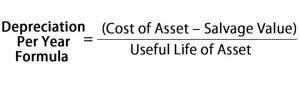
- This approach also enables easier calculation of daily performance and helps investors make informed decisions based on current market values.3.
- One of the basic concepts of risk management that underlies futures position is the initial margin that is collected from the clients who trade in the futures segment.
- The mark-to-market value for assets that are frequently traded is easy to determine.
- Mark-to-market (MTM) accounting is a valuation method that values assets and liabilities based on what they could be bought or sold for in today’s marketplace rather than their original price.
- Over the past few decades, consumers have become more curious about their energy consumption and personal effects on climate change.
- Futures contracts are leveraged instruments that allow a trader to hold a long or short position several times larger than the amount (margin) they initially commit to a trade.
Further, assuming each contract represents 100 bushels, the farmer is heading against a price rise of 2,000 bushels of apple . Enhance your proficiency in Excel and automation tools to streamline financial planning processes. Learn through real-world case studies and gain insights into the role of FP&A in mergers, acquisitions, and investment strategies.
The deposited funds are used as a “margin” or a protection for QuickBooks ProAdvisor the exchange against potential losses. For treasurers of both large and small corporations, a key part of their workflow revolves around derivatives trading such as NDF swaps and foreign currency options. The prices of such instruments, however, fluctuate several times during the same day, making it difficult to calculate the company’s total exposure. MTM is calculated by comparing an asset or liability’s current market value to its original cost or last recorded value. The difference between these two values represents the unrealised gain or loss. Let’s take the example of a cotton farmer in India who takes a short position in cotton futures contracts to hedge against a probable fall in cotton prices.
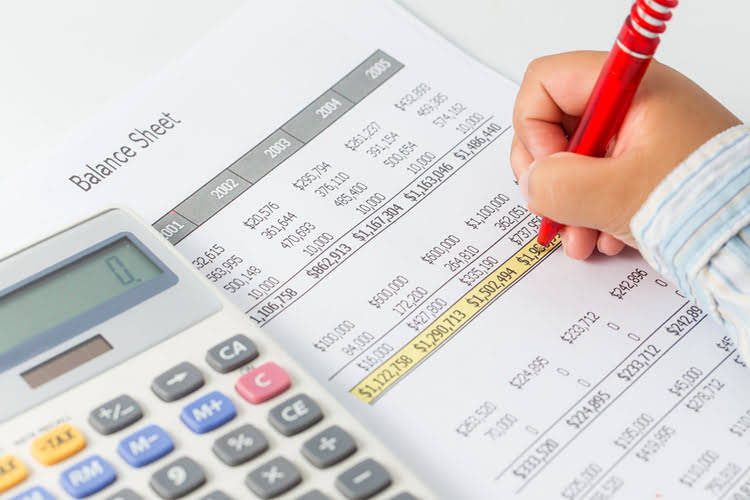
This simple accounting strategy has benefitted several industries:

The applications are endless, this could show a bank’s actual assets by valuing NPA’s at their actual null value, stocks in a portfolio at their actual value, etc. In fact, not using mark-to-market was one of the causal factors of 2008 subprime crisis, because banks showed illiquid assets that didn’t exist, in their retained earnings balance sheet books. Bookkeepers first used the mark-to-market accounting treatment in the 1800s.
- The daily settlement price recalculates open position values through the system which maintains daily profit and loss accounting.
- The system integrity of brokers and clearinghouses depends heavily on this process.
- That’s because it isn’t based on outdated information from a few years back.
- Investors can see their daily pay in / pay out obligation in the Contract Note sent by the Broker at the end of the day.
- It is a mark-to-market strategy that allows them to understand asset performance regularly.
Mark to Market Accounting in Investment Accounts
- While MTM enhances transparency, it can also lead to increased volatility in financial statements, particularly during times of market instability.
- Moreover, valuing certain assets at market prices can be challenging, particularly in illiquid markets or for complex financial instruments.
- The daily profit or loss is computed and the same is debited or credited from the blocked margin account by the stockbrokers.
- On the other hand, if your futures contracts have dropped in value, you would be suffering losses, and the exchange would be charging your account with the deposited margin.
- Traders often roll forward positions to later contracts to maintain exposure without settlement obligations.
- Absolutely, Mark-to-Market (MTM) accounting can have a ripple effect on a company’s stock value.
Mark-to-Market (MTM) is a way of valuing assets and liabilities at their current market price instead of the price paid earlier. It gives a clear and updated picture of finances, making it easier for businesses and investors to make decisions. The prices of the mark to market accounting futures contract fluctuate daily and can result in profit and losses for the buyers or the sellers. The MTM or Mark to Market settles these profits and losses daily by adjusting the initial margin (SPAN Margin + Exposure Margin).